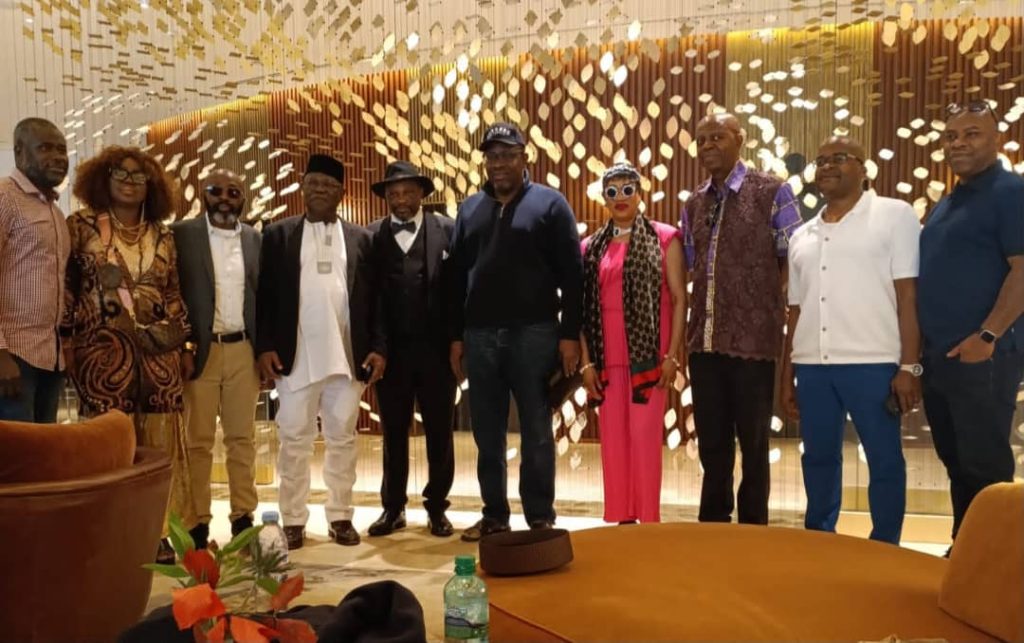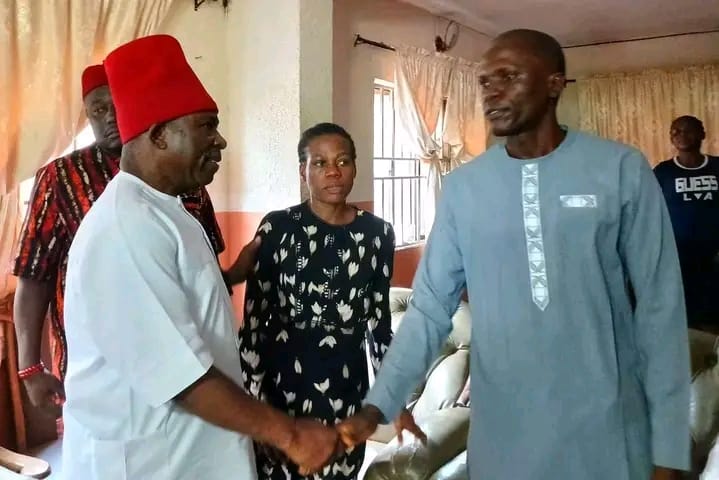
Photo: Dr Anuma Kalu Ulu
By Daniel Kanu
There are birthdays that are simply occasions for cutting cakes, receiving phone calls, exchanging pleasantries and counting the passage of another year.
But there are birthdays that provide an opportunity to pause, look beyond the celebration and reflect on the life of a man whose existence has made a meaningful difference in the lives of others.
Today is one of such occasions.
It is the birthday of my friend and brother, Dr Anuma Kalu Ulu, a man whose life has become a testimony to the enduring power of compassion, service and generosity.
To describe Dr Anuma Ulu merely as a medical doctor would be to tell only a small part of his story. To describe him only as a philanthropist would equally be inadequate.
He is, in many respects, a physician whose understanding of healing goes beyond the hospital environment; a humanitarian who recognises that poverty, lack of access to healthcare and educational disadvantage can themselves become serious threats to human dignity.
He is a man who has chosen to use what he has to lift others.
That, perhaps, is one of the greatest things that can be said about any human being.
As he marks another birthday today, I celebrate not merely the years he has lived but the lives he has touched, the families he has assisted, the young people whose educational journeys have received a boost because of his intervention, and the communities that have benefited from his generosity.
Dr Anuma Kalu Ulu, I call him Numullus, some of our friends call him Miller, some Okwaraji due to his dexterity in the field when playing football).
He is a philanthropist per excellence, a respected medical practitioner, medical expert, a gynaecologist, and geriatrician above all, a man with a heart of gold.
His story is also a reminder that philanthropy is sometimes inherited—not necessarily as money or property, but as a value, a philosophy and a responsibility to humanity.
The roots of Dr Anuma Ulu’s philanthropic disposition can be traced to his late father, Elder Kalu Ulu, of blessed memory.
In a society where children often inherit material possessions from their parents, Dr Anuma appears to have inherited something even more enduring from his father: the culture of helping others.
Helping people, indeed, runs in the Kalu Ulu family. Even his elder brother, Deacon Kalu Kalu Ulu, popularly
called K K, is not only a giver but a study in humility and integrity.
The reality is that the legacy of Elder Kalu Ulu has continued to live through his son, not merely in words or memories, but in concrete acts of service.
This is why the establishment of the Kalu Ulu Foundation, in memory of his late father, is particularly significant.
The Foundation represents more than a charitable organisation. It is an institutional expression of a family philosophy—that life becomes more meaningful when the fortunate remember those who need a helping hand.
Through the Foundation, Dr Anuma Ulu has supported people requiring medical attention and assistance, particularly within his Obiene-Ututu community and beyond.
What makes his approach remarkable is the breadth of his concern.
His assistance is not restricted to people from a particular family, political affiliation, social class or religious background. The underlying principle is need.
If someone needs medical attention and cannot afford it, the door is opened.
That is the essence of humanitarianism.
Medicine is often described as the profession concerned with saving lives. But the practice of medicine becomes even more meaningful when medical knowledge is combined with compassion and commitment for the life of others.
Dr Anuma Ulu appears to understand this distinction.
As a geriatric and medical expert, he has built a professional career around the health and wellbeing of people. But his commitment to humanity does not end when the working day is over.
Through his philanthropic interventions, free medical services have reached people who might otherwise struggle to access adequate medical attention.
And importantly, the outreach has not remained confined to his immediate community.
From Abia State, his humanitarian medical interventions have extended to other parts of the South-East and South-South, including Enugu, Imo, Akwa Ibom and Cross River states, among other places.
That geographical spread tells a story.
It tells us that his idea of community is larger than the place where he was born.
For Dr Anuma Ulu, community is wherever there is a human being in need.
This is the kind of philosophy that makes philanthropy truly transformational.
There is a difference between giving because one is expected to give and giving because one genuinely feels the pain of another person.
There is also a difference between publicity-driven charity and service driven by conviction.
Those who have encountered Dr Anuma Ulu closely can testify to the fact that his concern for people is not merely a birthday-season gesture or an occasional public relations exercise. It is a consistent aspect of his character.
Healthcare is one important dimension of his philanthropy. Education is another.
Hundreds of young people, according to those familiar with his interventions, have benefited from educational scholarships and support.
This is particularly important because education is one of the most powerful ways of breaking the cycle of poverty.
A medical intervention can save a life today. A scholarship can transform an entire lifetime.
When a young person who may have been forced to abandon school because of financial difficulty receives educational support, the beneficiary does not merely gain access to a classroom.
He or she gains a future.
The family gains hope.
The community gains another potential professional, entrepreneur, teacher, scientist, doctor, engineer, administrator or leader who can become the president of his country.
This is why Dr Anuma Ulu’s investment in education deserves special commendation.
He is not merely responding to immediate needs; he is investing in the future.
In doing so, he is helping to build human capital.
And there may be no more enduring legacy than that.
In our society, success is often measured by material possessions—houses, cars, businesses, positions and other visible symbols of achievement.
But there is another measure of success that is perhaps more important: How many lives are better because you lived?
That is a question worth asking about Dr Anuma Ulu.
What happens to the patient who could not afford medical treatment but received assistance?
What happens to the family whose burden was reduced because someone intervened?
What happens to the student whose education continued because a scholarship was provided?
What happens to the young person who now has hope because somebody believed in his or her potential?
These are the invisible monuments of philanthropy.
They may not carry the donor’s name on marble plaques, but they remain permanently inscribed in the lives of beneficiaries.
This, to me, is the real meaning of a good name.
There is something particularly touching about the way Dr Anuma Ulu has continued the legacy of his late father.
Every generation receives something from the generation before it.
The responsibility is to decide what to do with that inheritance.
Some inherit wealth and multiply it.
Some inherit businesses and expand them.
Some inherit social influence and use it for personal advancement.
But there are others who inherit values and turn those values into institutions that outlive them.
Dr Anuma Ulu belongs in that latter category.
By establishing the Kalu Ulu Foundation in honour of his father, he has ensured that the memory of Elder Kalu Ulu is not confined to family photographs, stories and private recollections.
His father’s memory has
continued to speak through acts of kindness.
Every patient helped, every student supported and every person given a new opportunity becomes, in a sense, another chapter in the continuing story of Elder Kalu Ulu’s legacy.
That is a beautiful way to remember a parent.
One can proudly boast that Numullus is a great gift from Obiene-Ututu to the world.
This is another dimension to Dr Anuma Ulu’s story that deserves recognition.
He may have deep roots in Obiene-Ututu and Abia State, but his impact is not restricted by geography.
Even from New York, United States, where he resides, he continues to touch lives.
This is an important reminder in an increasingly globalised world.
Home is not merely a geographical location. For people with a strong sense of responsibility, home can be wherever their roots are—and wherever their hearts remain connected.
Many people who travel abroad become disconnected from the communities from which they came.
Dr Anuma Ulu has demonstrated a different path because there is no year he will not visit his community to provide Doctor for free medical services.
Dr Anuma’s international residence has not erased his connection to home.
Instead, he has continued to look back, identify needs and contribute.
This is pure patriotism in one of its most practical forms.
You do not necessarily have to hold public office to serve your country.
You can serve through your profession.
You can serve through education.
You can serve through healthcare.
You can serve by creating opportunities.
You can serve by remembering where you came from.
And you can serve by helping people who may never have the opportunity to repay you.
Indeed, Numullus is an uncommon phenomenon.
There are people we meet and quickly forget.
There are others whose presence remains with us long after they have left.
Dr Anuma Ulu belongs to the second category.
He is one of those people whose character makes an impression.
His compassion is not selective.
His willingness to assist does not appear to be determined by whether the beneficiary can return the favour.
Infact he is best committed when the beneficiary cannot return the favour done.
That is what makes genuine philanthropy different from transactional generosity.
A transactional giver asks, “What will I get in return?”
A humanitarian asks, “What can I do to help?”
The difference between the two is enormous.
People like Dr Anuma Ulu are few.
In an age when individualism sometimes competes with communal responsibility, his example offers a refreshing reminder that success becomes more meaningful when it is shared.
The world has enough people who want to be celebrated.
What the world needs more of are people who make other people worth celebrating.
He remains a doctor who understands the meaning of humanity.
Perhaps the most fitting description of Dr Anuma Ulu is not simply that he is a doctor who treats patients.
He is a doctor who understands people.
There is a human being behind every medical case.
There is a family behind every patient.
There is a story behind every request for assistance.
There is often fear behind the face of someone seeking medical attention.
There is sometimes desperation behind the parent asking for help with school fees.
And there is frequently an entire future hanging in the balance when a young person is unable to continue an education because of financial constraints.
To respond to these circumstances with compassion requires more than professional knowledge.
It requires humanity.
And that is where Dr Anuma Ulu has distinguished himself.
His medical training may have taught him how to diagnose and treat diseases. His experiences in life appear to have taught him something equally important: the value of genuinely caring for people.
This birthday is not only about Dr Anuma Ulu.
It is also about the many people whose stories have intersected with his.
It belongs to the patient who received medical attention.
It belongs to the student who received a scholarship.
It belongs to the family whose burden was eased.
It belongs to the community that benefited from his medical outreach.
It belongs to the people in Abia, Enugu, Imo, Akwa Ibom, Cross River and beyond who have encountered his generosity.
And, in a special way, it belongs to the memory of Elder Kalu Ulu, whose values continue to live through his son.
Birthdays provide us with the opportunity to count years.
But sometimes, the more important thing to count is impact.
How many lives have been touched?
How many tears have been wiped?
How many dreams have been kept alive?
How many people have found hope?
How many young people have been given another chance?
These are the questions that give a birthday celebration its deeper meaning.
My dear brother and friend, Dr Anuma Kalu Ulu, today I join your family, friends, associates, beneficiaries and well-wishers to celebrate you.
I celebrate the doctor.
I celebrate the philanthropist.
I celebrate the humanitarian.
I celebrate the son who has kept his father’s legacy alive.
I celebrate the man whose heart remains connected to his people despite the distance of geography.
I celebrate the man who has demonstrated that one person’s generosity can create ripples far beyond the original act of kindness.
You are, indeed, a special gift—not only to Obiene-Ututu, not only to Abia State, not only to Nigeria, but to humanity.
Your story demonstrates that greatness is not measured only by the height one reaches, but more importantly by the number of people one helps along the way.
As you add another year today, may the years ahead bring you renewed strength, wisdom, good health, fulfilment and greater opportunities to continue the work of touching lives.
May the Kalu Ulu Foundation continue to grow in its mission and vision.
May the young people whose education you have supported become testimonies to the power of your generosity.
May the patients whose lives have been touched by your medical interventions never forget the kindness they encountered.
And may the legacy of Elder Kalu Ulu continue to shine through the life and work of his son.
In a world that sometimes celebrates what people possess more than what they contribute, men like Dr Anuma Kalu Ulu remind us of a more enduring truth:
A man’s greatest wealth is not what he keeps for himself, but what he uses to make life better for others.
That is why today is more than a birthday.
It is a celebration of service.
It is a celebration of compassion.
It is a celebration of humanity.
It is a celebration of a life that continues to give.
Happy birthday, my dear friend and brother, Dr Anuma Kalu Ulu.
May your light continue to shine.
May your hands continue to lift the weak.
May your heart continue to beat for humanity.
And may generations yet unborn tell the story of a remarkable man who understood that the greatest privilege of having the ability to help is the opportunity to help and lift others.
Happy birthday, Dr Anuma Kalu Ulu—an uncommon phenomenon and a rare gift to humanity.